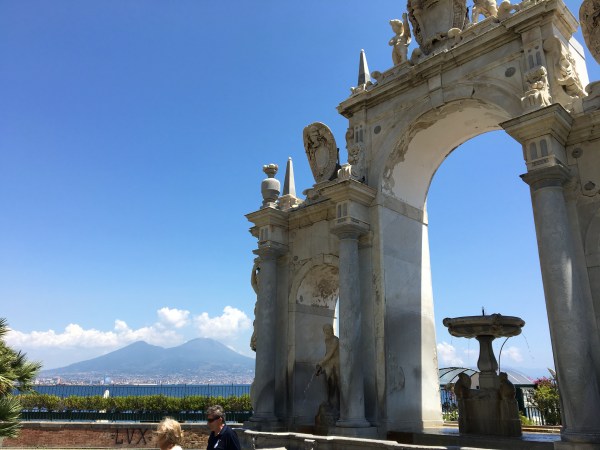
Picturehouse Central
I already liked Paulo Sorrentino’s films and I’d seen his last paean of love to Napoli, the ironically named Hand of God produced by Number 10 productions. So a new Sorrentino film showing in London at my favourite cinema Picturehouse Central was a must to see on the big screen; not least because Sorrentino’s films are always arrestingly visual

A Picaresque Pizza of a movie? As ever with a brilliant Italian film director there are several layers of intricately confusing threads from various stories. We are introduced to Parthenope, our protagonist and the original mythic name of Napoli, at birth in a brilliantly filmed, absurd opening shot, telling us much more than we realise as it is drenched with mythical symbolism, encompassing the Bay of Naples. Exactly like the original Parthenope our contemporary goddess is birthed within the waters breaking over Napoli.
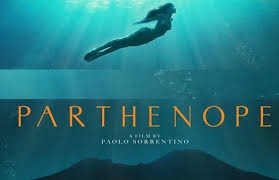
Like a cross between Caravaggio & Fellini this amacord Napoli provides us with startlingly brilliant images, and leaves it up to us to decode whatever sacred and profane meaning lies behind its slow dazzle; a sexual life aquatic involving both a fearless gangster who owns the city and a Mary Magdalene moment with a conclave-bound corrupt cardinal.
“See Naples and die” refers not to the cholera outbreak of 1973 shown as capable of stopping the funeral cortège of brother Raimondo, but to Napoli’s beauty which impressed Goethe 248 years ago when the Centro Storico was a world city with legendary views of the bay, Pompeii and its brooding volcano. We are given a deathless moment when death in a time of cholera means that Raimondo’s funeral is arrested by a combination of an extraordinary mechanical technology and a more usual public health lockdown.
The more you know about Napoli, Greek myths and film the more you will get out of this film. Like all those directors who started with UFA in Berlin, Hitchcock and the holy Billy Wilder, who is referenced here by the devilish Cardinal as the Anthropologist of “seeing” (which is what this film is about), Parthenope the film presents sumptuous visuals seemingly built around the life of Parthenope as child, beautiful seductive goddess and academic; a very discrete object of desire.
Elena Ferrante’s brilliant slow burn of a novel about Napoli, My Brilliant Friend is set amongst the poor who populate the centro storico with severely circumscribed vision. Yet Ferrante’s narrative arc is a classic post World War Two rags to riches through first generation academic success, achieved through perseverance not genius. Parthenope herself represents the inverse of extreme wealth, gratuitous beauty and intuitive genius wondering which labyrinth to wander down; haplessly seducing everyone. Rarely committing she remains mysterious whilst adoring only the professor and the writer who keep their distance. Eventually becoming a published academic alone again, or rightfully worshipped by her students. In Ferrante’s novel and Sorrentino’s film a trip to the Isle of Capri triggers the main narrative towards some kinds of closure.
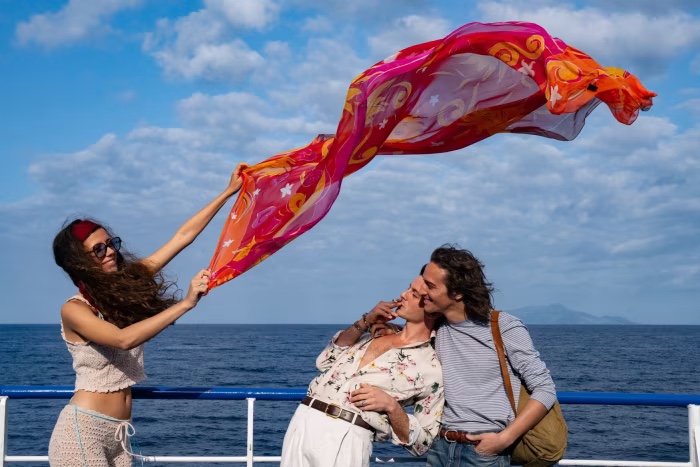
Like a thief Sorrentino steals fireworks from Hitchcock, as well as having told us that we need to be seeing as though we are watching the silent movie masters. Oscar winner Thelma reports that Scorsese now asks “the shot, the shot; what happened to the shot?” Well Parthenope answers Marty with abundant shots requiring our thoughtful attention; no wonder American reviewers on IMdB throw multiple “don’t make me think” rotten tomatoes. It’s a film for patient European art house film buffs not hyperactive franchise movie brats. Even popcorn obesity is gently mocked at the film’s end. The film concludes that “At the end of life only irony will remain” but as Steve Martin mockingly reminds us in Roxanne, another film about an intelligent beauty, “Irony? We haven’t had any use for that since Marvel!”
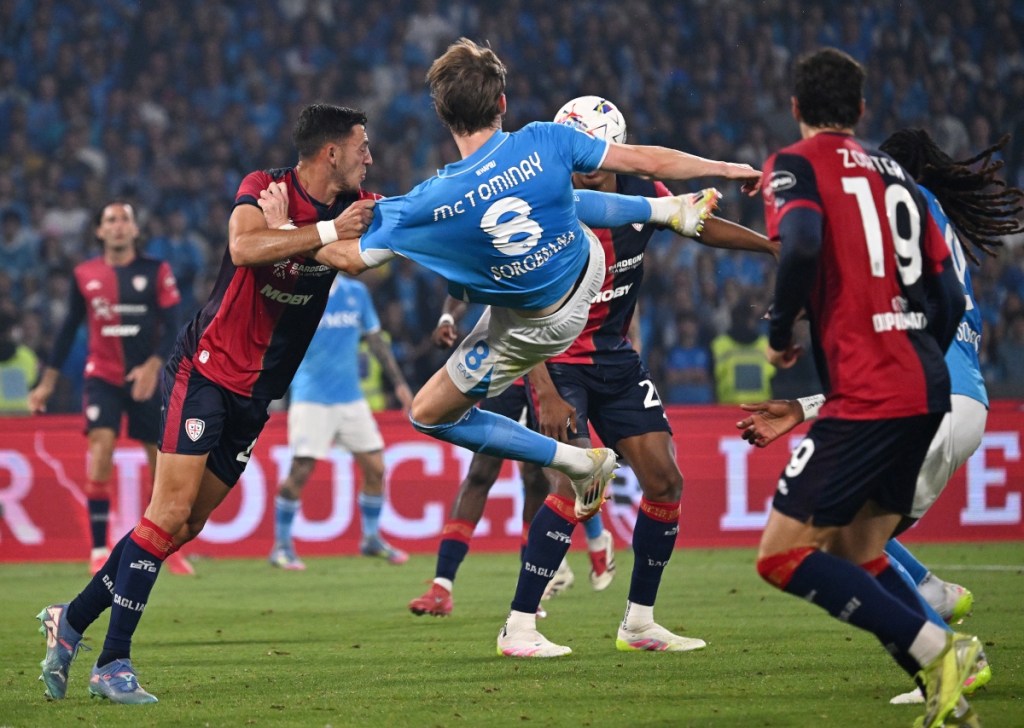
The film ends on Via Parthenope itself as our reluctantly seductive goddess arrives at the Grand Hotel Santa Lucia to eat, pray and love in celebration of her storied retirement from academia, just as a boat load of Napoli FC fans pass in celebration of winning the 2022-23 Scudetto. With marvellous synchronicity I saw this film 4 days after Scott McTominay scored the goal that guaranteed Napoli its 4th Scudetto.
The immaculate conception of Napoli has finally given birth to a wondrous cinematic love letter. Cities aren’t born nor evolve obviously but what emerges from their urban chaos and creation is the complexity of life. The Neapolitan Sorrentino knows that everything is a metaphor and has given us glistening iceberg of refracted rays of light to enjoy. I wish that you make of it what you will. I did. See it, swim in it, then search through your own memories…
Fred Garnett 28th May 2025
References
Paulo Sorrentino
https://www.imdb.com/name/nm0815204/?ref_=dyk_trv
Parthenope (goddess)
My Brilliant Friend; Elena Ferrante
“see Naples and die” Goethe 1778
Cholera Epidemic 1973
https://www.thelancet.com/journals/lancet/article/PIIS0140-6736(74)93214-0/
Billy Wilder (the anthropologist of seeing)
The 8 locations used in Naples that map to the story recommended by Visit Naples
 U3A Film Blog